Suez or Cape of Good Hope? The real optimization happens long before the vessel sails.
For many African importers, ocean freight from China is treated as a booking task: confirm the rate, receive the ETD, and wait for arrival. In reality, the biggest gains in time, cost, and reliability come from decisions made weeks earlier — about routing, port selection, buffers, and contingency plans.
Today’s environment adds complexity: climate volatility, regional conflicts, congestion, and schedule unreliability. Whether cargo transits via the Suez Canal or reroutes around the Cape of Good Hope, outcomes depend less on the ocean leg itself and more on how well the journey is designed end-to-end.
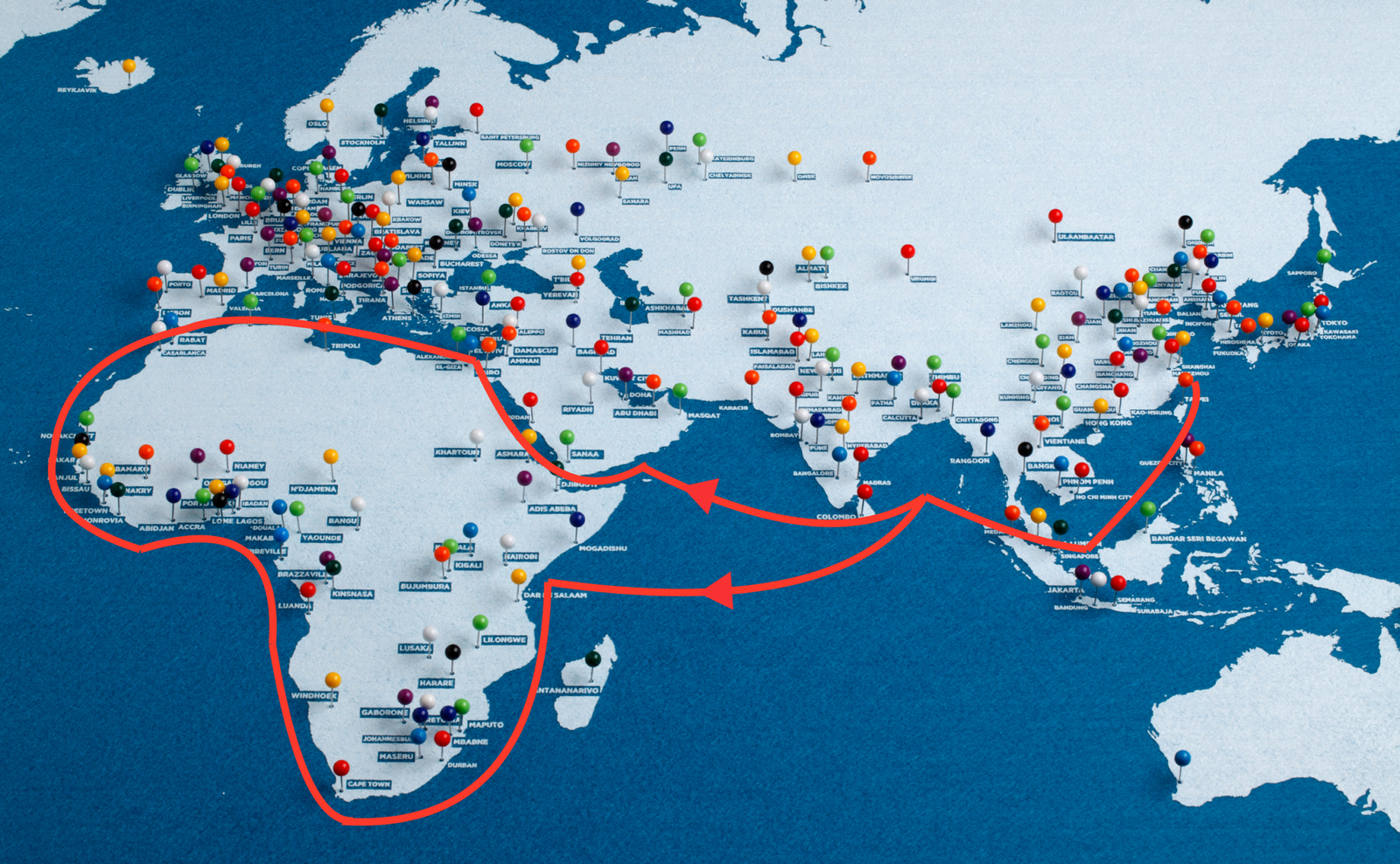
Two Main Arteries, Two Different Risk Profiles
Via the Suez Canal
Pros
- Shortest transit time between Asia and most of Africa’s north, west, and east coasts
- Lower fuel consumption → often lower base freight cost
- More frequent service strings
Risks
- Exposure to geopolitical tensions in the Red Sea region
- Canal queues or restrictions during incidents
- Schedule ripple effects across entire service loops
Via the Cape of Good Hope
Pros
- Bypasses Suez/Red Sea geopolitical exposure
- Predictable navigation in times of crisis
Trade-offs
- +10 to +15 days sailing time on many loops
- Higher fuel cost → rate impact
- Equipment imbalances and schedule recovery challenges
Key insight: the route choice is not only a carrier decision. Shippers can anticipate which loop their cargo is likely to use and plan buffers accordingly.
African Ports: The Multiplier Effect
Transit time at sea is only part of the story. The port of discharge often determines whether you gain or lose days (and money).
Consider differences in:
- Berth productivity and crane rates
- Yard congestion and dwell time
- Customs release speed and documentation readiness
- Availability of trucking/rail for evacuation
A vessel arriving “on time” to a congested port can still create demurrage, detention, and delivery delays that erase any routing advantage.
Practical rule: choose discharge ports not only by geography, but by operational reliability and inland connectivity.
Build Routing Into Procurement, Not After It
Many delays originate before cargo reaches the port of loading. Procurement teams confirm suppliers and incoterms without aligning with realistic sailings and port performance.
Better practice:
- Map likely service loops from the Chinese POL to your POD
- Validate weekly sailing frequency and typical transshipment points
- Add time buffers based on route risk (Suez vs Cape)
- Avoid planning arrivals during known congestion seasons or weather windows
Routing is a planning variable, not a surprise.
Climate, Conflict, and Contingency
Three forces now shape ocean planning:
- Climate events — cyclones, swells, and seasonal disruptions affecting African ports
- Geopolitical tensions — Red Sea, canal access, sanctions, insurance surcharges
- Network instability — rolled cargo, blank sailings, equipment shortages
Mitigation means:
- Splitting critical cargo across sailings or carriers
- Advancing shipments for essential SKUs
- Keeping alternative POD options open when feasible
Resilience is often cheaper than recovery.
Work Backwards From Delivery, Not ETD
Instead of asking, “When does the vessel leave China?”, start with:
“When must the cargo be available at my warehouse?”
Then subtract:
- Average sea transit for the likely route
- Port dwell and customs time at POD
- Inland transport time and buffer
This reverse planning exposes whether you should ship this week or next — before rates or space become the issue.
Collaborate Closely With Forwarders and Carriers
Ask better questions:
- Which loop will my container likely be on?
- What is the historical reliability on this lane?
- What happens if the route diverts from Suez to the Cape?
- How many days of variance should I plan?
Forwarders see patterns across bookings. Use that visibility.
Turning Ocean Complexity Into Advantage
African supply chain managers who plan routes proactively often outperform competitors who chase the lowest rate. By aligning procurement timing, route risk, port performance, and inland evacuation, they reduce surprises that cost far more than freight.
From China to Africa, optimization is not about the sea alone. It is about designing the journey across ocean, port, and land — before the container is sealed.
SupplyChainAfrika.com
Insights shaping Africa’s supply chains