Free trade agreements (FTAs) are often discussed in diplomatic language: market access, tariff elimination, and economic integration. For supply chain professionals in Africa, however, these benchmarks translate into something more concrete: new sourcing corridors, altered logistics flows, and fresh opportunities—but also new compliance challenges.
From long-standing links with the European Union to twin-direction trade with Turkey and cooperation under the Greater Arab Free Trade Area, African economies are woven into a network of preferential trade relationships that affect freight, customs, transport routes, and industrial competitiveness.
The Landscape of Africa’s External Trade Agreements
Africa’s trade agreements with partners outside the continent have evolved significantly over the past three decades. While the African Continental Free Trade Area (AfCFTA) aims to unify intra-African trade, external agreements remain crucial for access to global markets, investment flows, and supply chain integration.
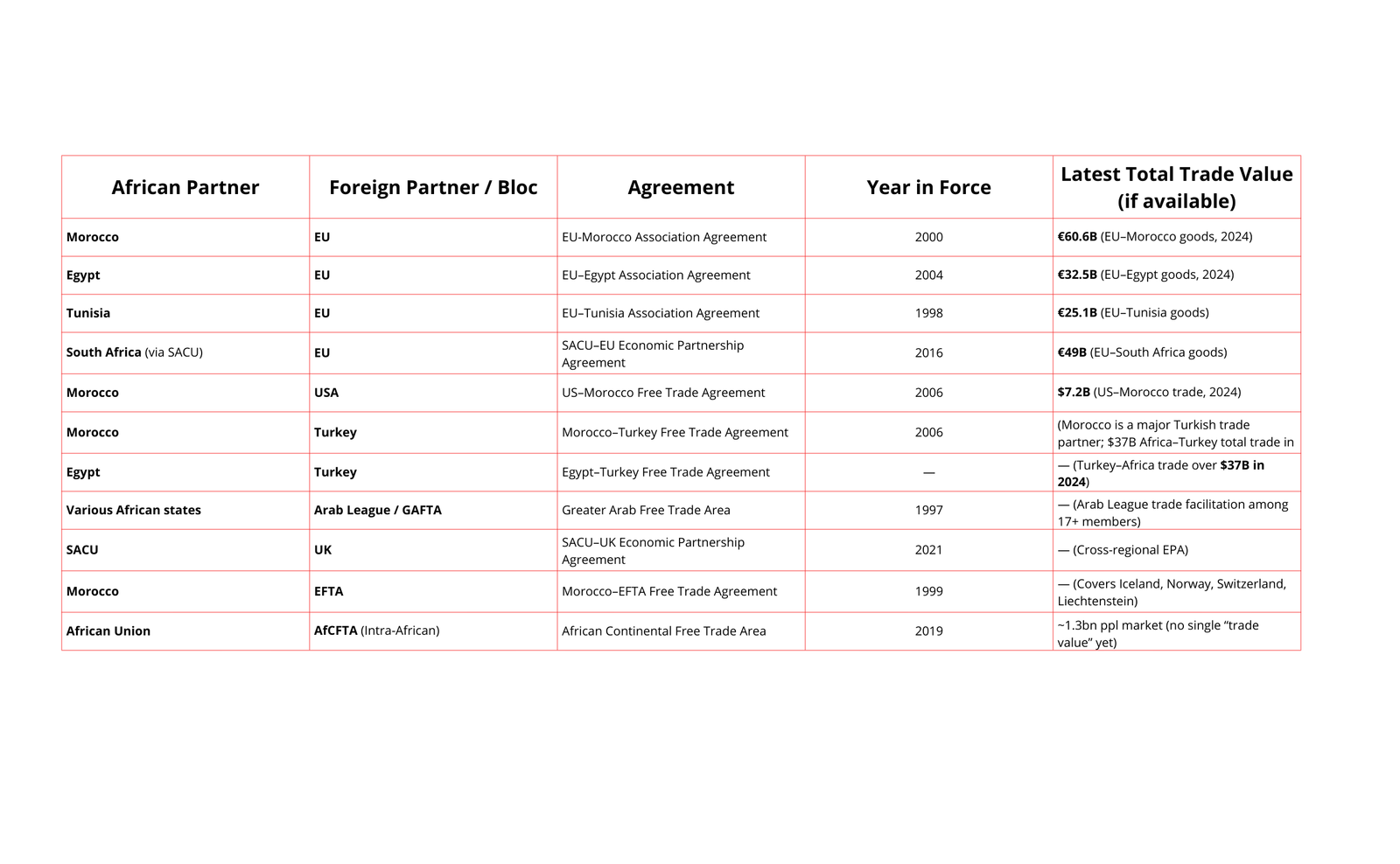
Trade Agreements Between African and Non-African Partners
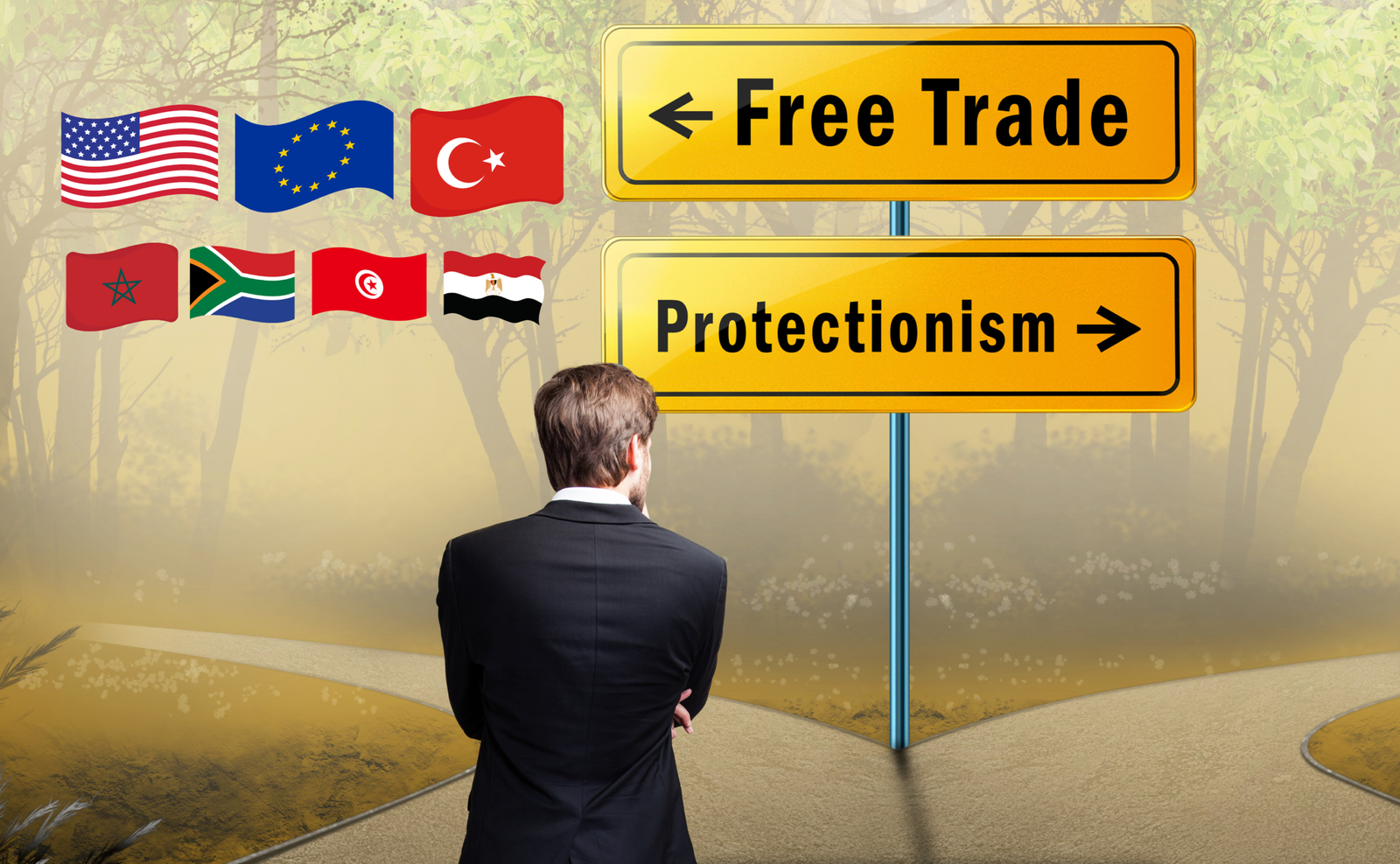
Turkey negotiates bilateral FTAs with African partners in parallel with its EU customs union commitments, including deals with Morocco, Egypt, Tunisia and ongoing talks with Gulf states and others.
Also, many African countries participate in GAFTA (Greater Arab Free Trade Area) under the Arab League.
Below are key agreements shaping Africa’s connectivity:
Europe
- EU–Morocco Association Agreement (2000): A cornerstone of North African trade, with EU–Morocco trade valued at around €60.6 billion in 2024, driving manufacturing and logistics linkages across the Mediterranean.
- EU–Egypt & EU–Tunisia Agreements (2004/1998): Anchoring North Africa’s trade with Europe and influencing freight flows through Mediterranean ports.
- SACU–EU EPA (2016): A regional agreement that connects Southern Africa’s supply chains to European markets.
United States
- US–Morocco FTA (2006): A bilateral pact that supports two-way trade (about $7.2B in goods in 2024), opening logistics corridors across the Atlantic.
Turkey
- Morocco–Turkey FTA (2006) and Egypt–Turkey FTA: Part of a strategic Eurasian trade network. Turkey–Africa trade exceeded $37 billion in 2024, with North African partners among the most active.
Arab League / GAFTA
- Agreements among Arab states — such as Morocco, Egypt, Tunisia, and others — aim to facilitate trade by eliminating duties within the Arab League framework.
EFTA and UK
- Morocco–EFTA FTA (1999) and SACU–UK EPA (2021) expand Africa’s preferential access to European and global markets beyond the EU itself.
What These Agreements Do for African Supply Chains
Lower Tariffs and Competitive Cost Structures
FTAs reduce or eliminate tariffs on qualifying goods. For exporters, this lowers landed cost and improves competitiveness in partner markets. For importers, preferential access can reduce procurement cost and influence sourcing decisions.
New Trade Corridors
Preferential access often means cargo volumes shift toward:
- Mediterranean corridors for EU trade
- North Atlantic routes for US and UK trade
- Trans-Saharan and Red Sea pathways for Middle East and Arab markets
This affects port choice, liner schedules, and inland logistics planning, especially for countries that serve as regional gateways.
Industrial Upgrading
Trade agreements encourage foreign direct investment, especially in export-oriented manufacturing. Investors seek duty-free access and predictable rules — but this also requires supply chains that can deliver consistently.
Strengths and Limitations
Strengths
- Market access scale: Agreements open large consumer markets and anchor long-term demand for African exports.
- Investment signals: Predictability attracts manufacturing investment and encourages logistics upgrading.
- Standards alignment: Many FTAs incorporate regulatory alignment that improves quality and traceability.
Weaknesses
- Non-tariff barriers remain: Tariff elimination does not fix customs delays, leading to supply chain friction.
- Rules of origin complexity: Preference requires tracking and documentation that many African suppliers struggle to meet.
- Uneven benefits: Not all partners benefit equally—countries with better ports and connectivity capture more value.
Conclusion
Free trade agreements between African countries and external partners are more than legal instruments: they are active forces shaping supply chains, logistics corridors, and economic growth. The gains from these partnerships depend on how well goods flow—from port to factory to market—and how African supply chain professionals adapt to changing trade patterns.
As Africa expands its network of agreements, the real test will be turning preferential market access on paper into competitive, reliable, and resilient logistics operations that benefit producers, exporters, and consumers alike.
SupplyChainAfrika.com
Insight on African supply, trade, and logistics ecosystems.