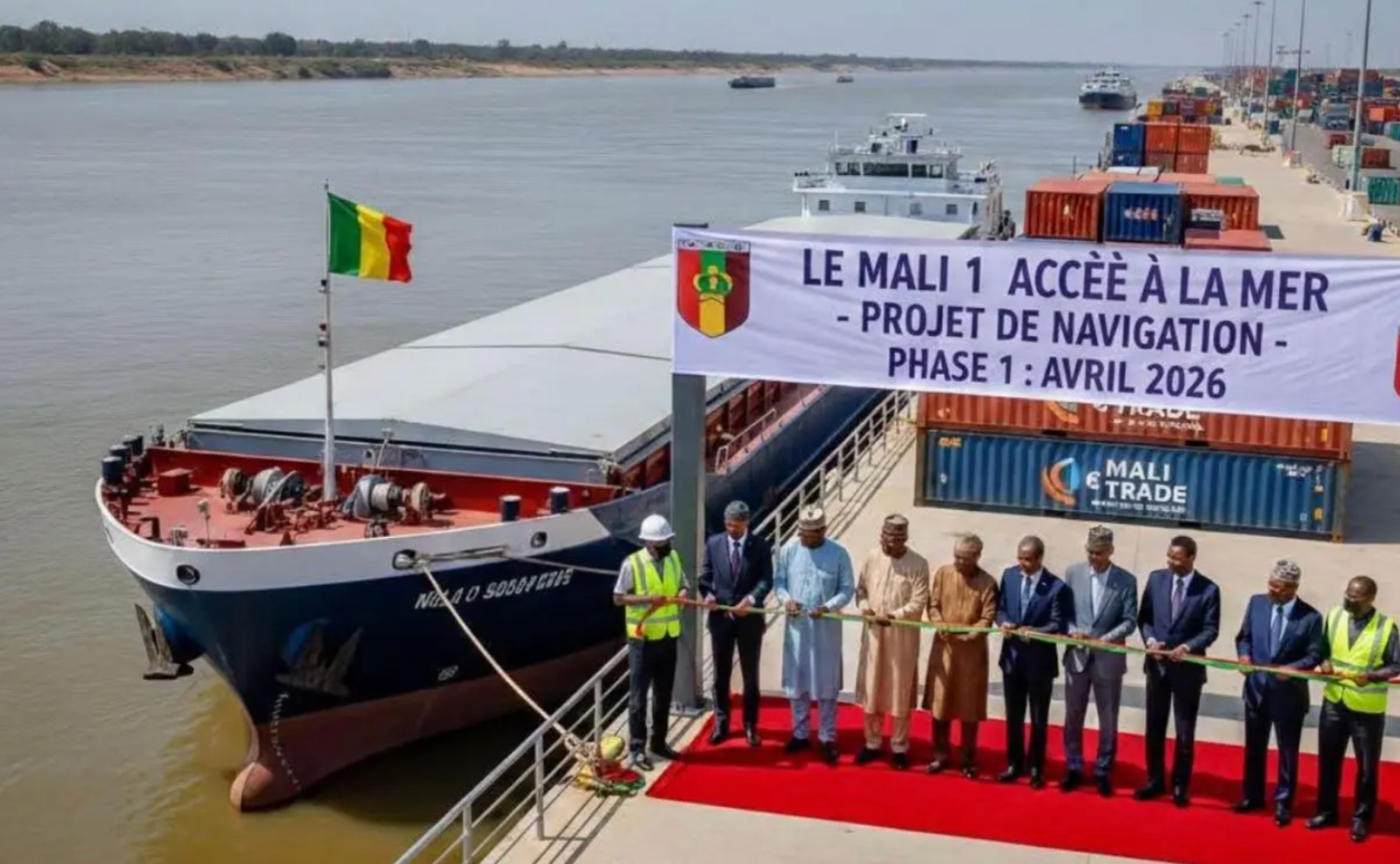
Mali is preparing to secure direct access to the Atlantic Ocean through a major inland navigation project along the Senegal River, marking a historic shift for the landlocked West African country. The planned Saint-Louis–Ambidédi river corridor, stretching approximately 900 kilometers, will connect the Atlantic port city of Saint-Louis in Senegal to Ambidédi in Mali’s Kayes region. The project, estimated at around $800 million (approximately 446 billion CFA francs), is led by the Organisation pour la Mise en Valeur du Fleuve Sénégal (OMVS) in cooperation with Senegal, Mali, Mauritania, and Guinea, with an official launch expected in April 2026, as reported by Daba Finance and Africa Business Insider.
For Mali, whose exports currently depend heavily on road corridors through neighboring coastal countries, the project could significantly reshape logistics dynamics. Preliminary studies indicate that transport costs could decrease by up to 60% compared to road freight, improving competitiveness for key Malian exports such as gold, cotton, and agricultural products. Reduced logistics expenses would also lower the cost of importing fuel, construction materials, and consumer goods, potentially stabilizing domestic markets. According to regional trade analysts cited by AllAfrica, the corridor could strengthen Mali’s trade resilience by diversifying its access routes to global markets.
Beyond its economic dimension, the project carries strategic and geopolitical weight. The Senegal River basin, shared by Mali, Senegal, Mauritania, and Guinea, has long been managed under the OMVS framework, making it one of West Africa’s most structured examples of cross-border infrastructure cooperation. By developing modern river ports, dredging navigational channels, and integrating multimodal logistics platforms, the corridor aims to create a reliable inland waterway capable of handling bulk cargo flows efficiently. This initiative aligns with broader regional ambitions to enhance trade integration within the Sahel and West Africa.
However, challenges remain. Financing mobilization, seasonal water level variations, dredging requirements, and long-term operational governance will determine the project’s success. If executed as planned, the Saint-Louis–Ambidédi corridor could become a transformative model for landlocked African economies seeking alternative maritime access. For the regional supply chain ecosystem, the project signals a structural evolution in West African trade infrastructure, potentially reshaping freight flows and industrial competitiveness across the sub-region.