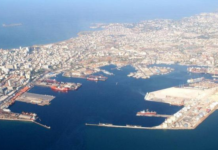

Roughly one-third of African countries have no coastline. For these nations, every import and export must cross at least one border before reaching a seaport. The result is higher costs, longer transit times, and greater exposure to logistical friction.
But across Africa, a combination of corridor development, rail revitalization, inland dry ports, digital borders, and high-level political initiatives are beginning to dismantle barriers to trade—from the Sahel to Southern Africa.
Africa’s Landlocked Countries (16)
Burkina Faso • Burundi • Central African Republic • Chad • Ethiopia
Lesotho • Eswatini • Malawi • Mali • Niger • Rwanda
South Sudan • Uganda • Zambia • Zimbabwe • Botswana
Together, these nations represent ~200 million people and significant economic potential — especially in agriculture, mining, manufacturing, and regional commerce.
How Landlocked Countries Manage Trade Without a Coastline
Landlocked countries rely on transit corridors through coastal neighbors. Cargo typically moves by truck, rail, and inland terminals, but multiple borders, procedures, fees, and congestion raise total landed costs.
| Landlocked Countries | Main Transit Gateways (Ports) |
|---|---|
| Uganda, Rwanda, Burundi, South Sudan | Mombasa (Kenya), Dar es Salaam (Tanzania) |
| Ethiopia | Djibouti Port (90%+ of trade) |
| Niger, Burkina Faso, Mali | Abidjan (Ivory Coast), Tema (Ghana), Lomé (Togo) |
| Zambia, Malawi, Zimbabwe, Botswana | Durban (South Africa), Beira & Nacala (Mozambique) |
| Chad, Central African Republic | Douala (Cameroon), Pointe-Noire (Congo) |
Logistics Pain Points for Landlocked African Countries
1) Higher Transport Costs
Landlocked countries often face 20–50% higher logistics costs than coastal peers due to:
- Multiple customs clearances and checkpoints
- Transit fees, road user charges, and informal payments
- Port dwell time, border queues, and corridor congestion
2) Longer Transit Times
Inefficient corridors, limited rail capacity, and paperwork bottlenecks can add days (sometimes weeks) to delivery—raising inventory costs and disrupting supply chain planning.
3) Lower Trade Competitiveness
Exporters can lose out in global markets because transport costs inflate the final price. This weakens industrial diversification and slows the move from raw exports to higher-value manufacturing.
Desenclavement: Strategic Responses Across Africa
“Désenclavement” (unlocking) is increasingly driven by a blend of infrastructure and policy reforms. The most impactful initiatives focus on predictable corridors, rail freight, inland clearance, and digital trade facilitation.
1) AfCFTA Trade Facilitation
The African Continental Free Trade Area (AfCFTA) supports a continent-wide push for harmonised procedures, lower trade barriers, and smoother cross-border movement—essential for landlocked countries that depend on multiple jurisdictions.
2) Trans-Africa Highway & Corridor Development
Corridors such as the North–South Corridor, Tripoli–Cape Town, and Lagos–Mombasa are designed to reduce travel time and improve reliability between inland capitals and major ports.
3) Rail Revival (Lower Cost, Higher Volume)
Rail freight is critical for bulk commodities and container flows at scale. Key examples include:
- Addis Ababa–Djibouti Railway: Ethiopia’s backbone export/import route
- Kenya SGR (Mombasa–Nairobi): a platform for longer-term regional connectivity
- TAZARA (Tanzania–Zambia): an historic link to the Indian Ocean with renewed strategic importance
4) Inland Dry Ports & Inland Container Depots (ICDs)
Dry ports and ICDs in Kampala, Kigali, Modjo, Isaka, N’Djamena and beyond allow customs clearance closer to producers. This reduces port congestion, shortens container cycle time, and lowers demurrage risk.
5) Digital Borders & Electronic Single Windows
Electronic Single Windows, e-manifests, pre-arrival processing, and cargo tracking reduce paperwork, delays, and corruption risk. Digitalisation is increasingly becoming a “virtual corridor” that speeds up physical corridors.
Morocco’s Royal Initiative: Unlocking Access for the Sahel
In recent years, King Mohammed VI of Morocco has promoted a regional vision to integrate Sahel economies into continental trade networks. The objective: reduce isolation, expand gateway options, and connect landlocked countries to more competitive corridors.
Political & Economic Integration
Morocco’s engagement with Sahelian states (notably Mali, Niger, Burkina Faso, Chad) emphasises cooperation in infrastructure, investment, energy, transport, and logistics—supporting access to global markets and regional value chains.
Infrastructure Partnerships & Atlantic Gateways
The initiative promotes strategic linkages between Moroccan ports (Tanger Med, Casablanca) and Sahel corridors, encouraging investment in roads, rail links, and logistics platforms that open new options to the Atlantic.
Trade & Industrial Zones
By supporting industrial parks, logistics hubs, and special economic zones, the approach aims to create value-adding nodes near corridors—so landlocked economies can export more than raw materials.
Why This “Désenclavement” Matters
Lower logistics friction = more competitive economies. With smarter corridors, inland terminals, and political coordination:
- Landlocked countries can export value-added goods more competitively
- Regional hubs gain scale and attract investment
- Transport risk and cost decrease for producers and consumers
- Intra-Africa trade becomes more viable under AfCFTA
Challenges Still Holding Back Landlocked Trade
- Financing gaps for multi-country infrastructure
- Policy misalignment across sovereign borders
- Security risks along strategic corridors
- Maintenance costs for roads and rail networks
Geography Doesn’t Have to Be Destiny
Africa’s landlocked countries are not condemned to permanent isolation. With sustained investment in corridors, rail, inland terminals, and digital trade systems—plus high-level initiatives like Morocco’s Sahel integration vision—the continent is building practical pathways toward lower trade costs, stronger competitiveness, and deeper economic integration.
Want more insights like this? Follow SupplyChainAfrika for weekly analysis on African ports, corridors, logistics policy, and trade infrastructure.