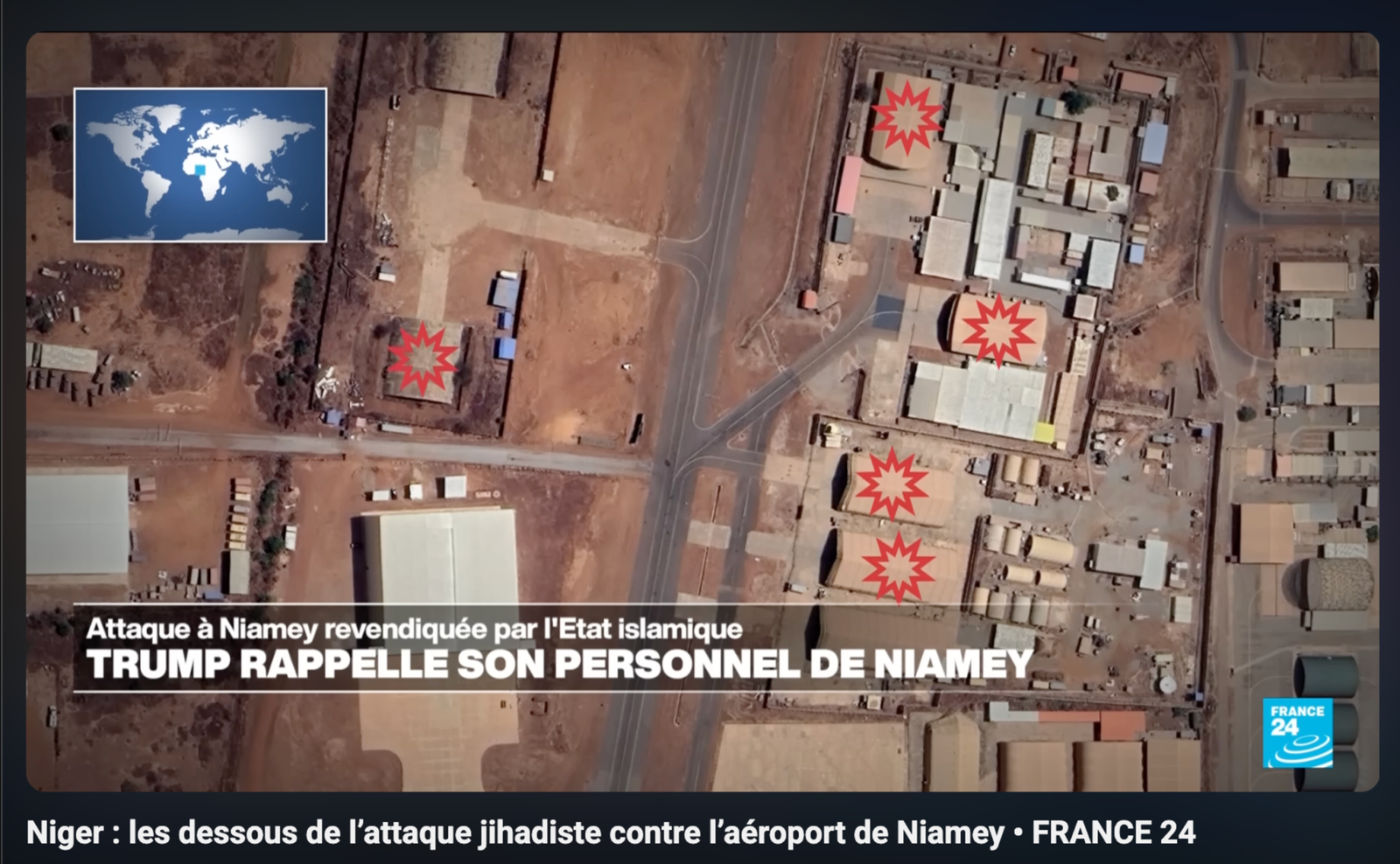
Niamey, Niger — Late January 2026 — A coordinated terrorist assault struck the Diori Hamani International Airport and adjacent military base (Air Base 101) in Niger’s capital Niamey on the night of January 29, 2026. The incident, claimed by Islamic State affiliates operating in the Sahel, represents a serious escalation in regional violence and carries tangible implications for supply chains, cross-border trade, and logistics operations in West and Central Africa.
According to local authorities, Nigerien defence forces repelled the attack after intense exchanges that lasted around two hours, killing around 20 attackers and capturing 11 others. Four Nigerien soldiers were wounded, and several aircraft parked on the tarmac were damaged. The military operation involved small arms, drones, and explosives in what was described as a surprise and coordinated assault near critical transportation infrastructure.
The Islamic State in the Sahel Province (ISSP) — connected to broader Islamic State networks — claimed responsibility through its Amaq News Agency. Niger’s military government, which seized power following a 2023 coup and has deepened ties with Russia, also levied unverified accusations against foreign governments as alleged sponsors of the attack, a claim dismissed by those countries.
The Context: Sahel Instability and Strategic Targets
The Sahel region — spanning parts of Senegal, Mali, Burkina Faso, Niger, and Chad — has experienced persistent jihadist activity for more than a decade. Groups linked to Islamic State and al-Qaeda have conducted frequent attacks on military targets, government posts, and civilian populations. In 2024, terrorism-related deaths in the Sahel represented a disproportionately large share of global terrorism fatalities, reflecting entrenched insecurity and governance challenges.
The assault on Niamey’s international airport is significant not only for its proximity to the capital and military infrastructure but also because airports are crucial nodes for international travel, cargo movement, and emergency responses. Disruption at such a transportation hub can ripple across logistics networks that depend on timely passenger and freight movements.
What This Means for Supply Chains and Logistics
For logistics and trade professionals — especially those operating across West and Central Africa — the Niamey attack underscores several risk factors with operational consequences:
1. Airport and Air Cargo Vulnerability
International airports handle not only passengers but also air cargo, including urgent shipments such as perishables, high-value items, and medical supplies. Even limited damage or temporary closures can lead to:
- flight cancellations and re-routing
- backlog of airfreight cargo
- increased transportation costs due to diverted routes
2. Risks to Cross-Border Ground Transport
Heightened terrorism risk increases the need for security escorts and route verification for road transport across borders, raising costs and transit times. Freight operators moving goods across Niger into Burkina Faso, Mali, or Nigeria may face:
- higher insurance premiums
- convoy requirements
- unpredictable delays
3. Investor and Trade Confidence
Terrorist attacks near major logistics hubs can dampen investor confidence, especially when paired with political instability. Foreign companies may recalibrate investment decisions, supply routes, and regional distribution strategies to avoid flashpoints.
4. Humanitarian and Aid Logistics
Niger is also a transit point for humanitarian supplies heading to conflict-affected regions. Disruptions at Niamey could delay aid delivery, complicating logistics for relief organizations that rely on predictable airport operations.
Operational and Risk Management Implications
Supply chain leaders working in or through the Sahel must now consider:
Enhanced Risk Monitoring
Integrate real-time security intelligence into transportation planning systems to anticipate disruptions.
Contingency Routing
Prepare alternative air and ground routes, including more secure transit points and inland hubs.
Collaborative Security Protocols
Work closely with logistics providers, local authorities, and security teams to safeguard personnel and cargo.
Insurance and Cost Planning
Reassess insurance coverage and pricing to reflect elevated risk without over-allocating costs that erode competitiveness.
Strategic Takeaway
The attack on Niamey’s airport is a stark reminder that infrastructure — including ports, airports, and ground gateways — are not just physical assets but strategic nodes subject to geopolitical and security pressures. Resilience in African supply chains increasingly demands security-aware planning, cross-border collaboration, and adaptive logistics design.
SupplyChainAfrika.com
Reporting logistics, risk, and trade developments that shape African supply chains.